Through the rest of this post, we’ll walk you through each of these features and explore what’s new in this Kong Konnect release.
##
## Kong Konnect Personal Access Tokens
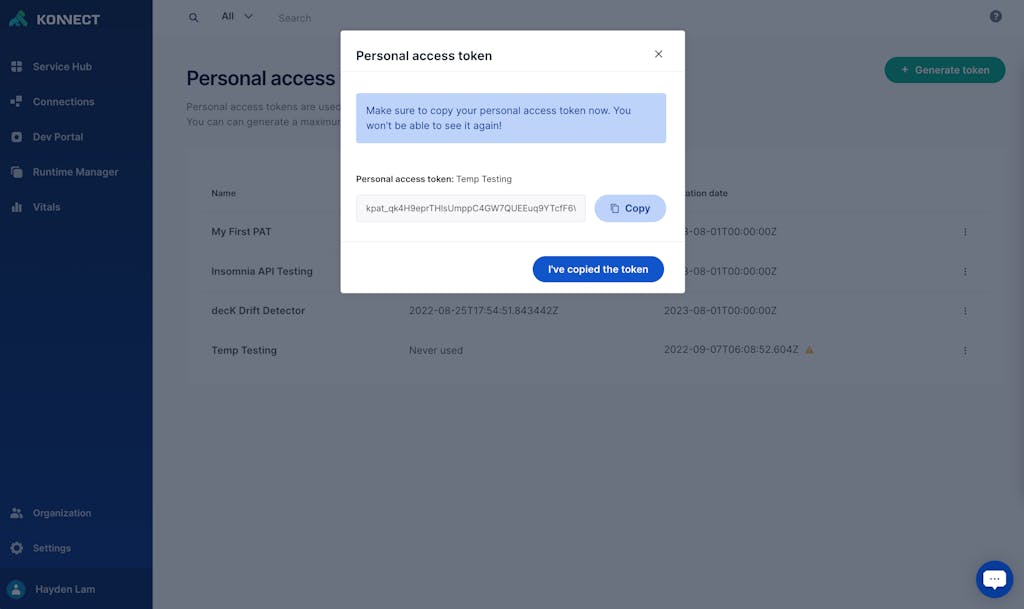
Figure 1: Kong Konnect Personal Access Tokens
The introduction of the Kong Konnect personal access token (PAT) allows users to generate an alternate set of credentials that can be used to authenticate [decK](https://docs.konghq.com/deck/latest/)decK for Kong Konnect.
As a result, organizations that have Single Sign-On enabled are able to utilize personal access tokens to bypass the need for usernames and passwords completely. PATs also serve as the preferred way to securely authenticate automated tooling and custom integrations.
- **Access Control** – PATs are tokens that belong to and represent the owner of the token. Therefore, the roles and permissions of the PAT are inherited from the roles granted to the user or via the user’s team membership.
- **Token Expiration** – PATs are long-lived tokens with a configurable expiration date of up to 12 months token lifetime.
- **Token Rotation** – Each Kong Konnect user is allowed up to 10 PATs. This allows the users to manage unique credentials for different use cases and rotate tokens as necessary.
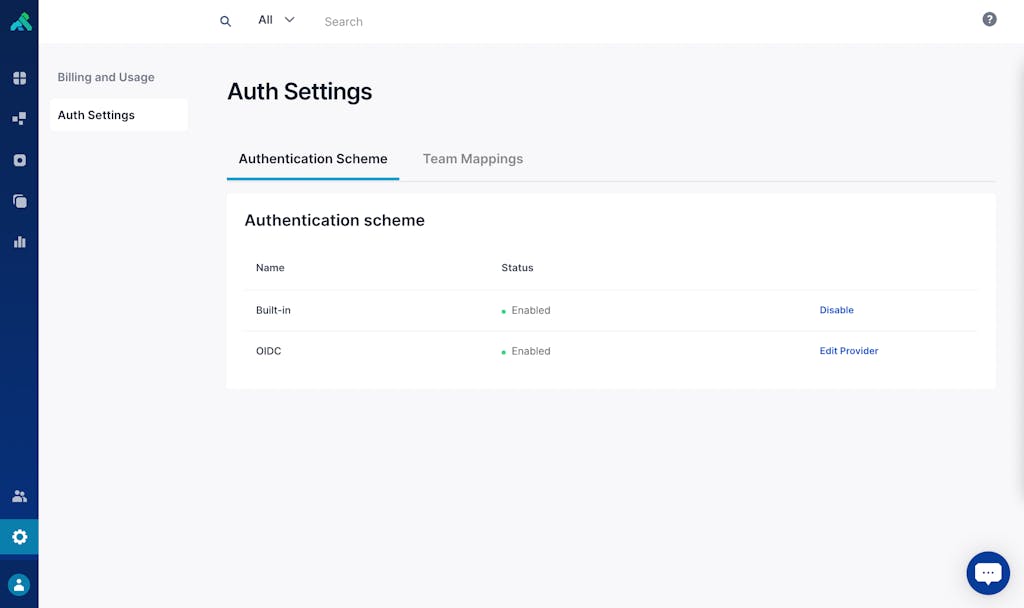
Organizations have the option to toggle each authentication scheme independently, which allows three states to exist: Built-in auth only, SSO only or both enabled. This allows greater integration with existing IT infrastructure as well as support for service accounts should the need arise.
If SSO is enabled with an OIDC provider, the Team Mappings option allows users who belong to an IdP group to be automatically mapped to a Konnect Team via their group claims. Users who log in to Kong Konnect with a verified group claim will have their team memberships replaced with that configured in the Team Mappings tab.
Combined, the OIDC-SSO and the Team Mappings allow additional users to be automatically provisioned in Kong Konnect and their access automatically granted once the integration with the IdP is configured.
Until now, KAi could tell you how to set up a service, suggest the right plugins, and point you at the docs. Useful, but you still had to do some of the work yourself. V2 changes that. With our new Code Mode MCP integration, KAi can create, update
Alex Drag
# Kong Simplifies Multicloud Cloud Gateways with Managed Redis Cache
Managed Redis cache is a turnkey "Shared State" add-on for Kong Dedicated Cloud Gateways. It is designed to combine the performance of an in-memory data store with the simplicity of a SaaS product. When you spin up a Dedicated Cloud Gateway in Kong
Amit Shah
# Kong MCP Registry: Connect AI Agents with the Right Tools
The Kong MCP Registry acts as a central directory for AI agents and clients to access services that provide context or take action. For AI agents, think of it as a combination of a "Service Catalog" and a "Developer Portal." It offers the metadata,
Jason Harmon
# New MCP Support Across the Entire Konnect Platform
Bridging the API (and API access) gap between AI coding tools, agents, and the APIs that they “eat” Data might be the fuel for AI. But APIs are the proper way to package that “fuel” as AI-ready “food” is through the API. AI coding tools can do a lot
Alex Drag
# Datakit Flow Editor: A Visual Approach to API Orchestration
Explore Kong Konnect’s new approach to API Orchestration Different teams, different preferences API orchestration at the gateway layer can involve coordinating multiple services, transforming data, and managing request flows. Some teams prefer worki
Alex Drag
# Building a First-Class Kubernetes Experience in Kong Konnect
Simplify operations and scale with confidence To unlock Kubernetes’ full potential, many enterprises are relying on three key building blocks available in Kong Konnect today: Kubernetes Ingress Controllers: Ingress controllers are used for managing
Adam Jiroun
# Unveiling Kong Ingress Controller in Kong Konnect: The Power of True Unified API Management
As we continue to push the boundaries of API management, we're excited to announce the beta release of Kong Ingress Controller within Kong Konnect. Revealed at KubeCon + CloudNativeCon Europe 2023, this new integration turns Kong Konnect into the wo
Kong
# KAi v2 is Live: The Agent Building Infrastructure for Agents
Until now, KAi could tell you how to set up a service, suggest the right plugins, and point you at the docs. Useful, but you still had to do some of the work yourself. V2 changes that. With our new Code Mode MCP integration, KAi can create, update
Alex Drag
# Kong Simplifies Multicloud Cloud Gateways with Managed Redis Cache
Managed Redis cache is a turnkey "Shared State" add-on for Kong Dedicated Cloud Gateways. It is designed to combine the performance of an in-memory data store with the simplicity of a SaaS product. When you spin up a Dedicated Cloud Gateway in Kong
Amit Shah
# Kong MCP Registry: Connect AI Agents with the Right Tools
The Kong MCP Registry acts as a central directory for AI agents and clients to access services that provide context or take action. For AI agents, think of it as a combination of a "Service Catalog" and a "Developer Portal." It offers the metadata,
Jason Harmon
# New MCP Support Across the Entire Konnect Platform
Bridging the API (and API access) gap between AI coding tools, agents, and the APIs that they “eat” Data might be the fuel for AI. But APIs are the proper way to package that “fuel” as AI-ready “food” is through the API. AI coding tools can do a lot
Alex Drag
# Datakit Flow Editor: A Visual Approach to API Orchestration
Explore Kong Konnect’s new approach to API Orchestration Different teams, different preferences API orchestration at the gateway layer can involve coordinating multiple services, transforming data, and managing request flows. Some teams prefer worki
Alex Drag
# Building a First-Class Kubernetes Experience in Kong Konnect
Simplify operations and scale with confidence To unlock Kubernetes’ full potential, many enterprises are relying on three key building blocks available in Kong Konnect today: Kubernetes Ingress Controllers: Ingress controllers are used for managing
Adam Jiroun
# Unveiling Kong Ingress Controller in Kong Konnect: The Power of True Unified API Management
As we continue to push the boundaries of API management, we're excited to announce the beta release of Kong Ingress Controller within Kong Konnect. Revealed at KubeCon + CloudNativeCon Europe 2023, this new integration turns Kong Konnect into the wo
Kong
# KAi v2 is Live: The Agent Building Infrastructure for Agents
Until now, KAi could tell you how to set up a service, suggest the right plugins, and point you at the docs. Useful, but you still had to do some of the work yourself. V2 changes that. With our new Code Mode MCP integration, KAi can create, update
Alex Drag
# Kong Simplifies Multicloud Cloud Gateways with Managed Redis Cache
Managed Redis cache is a turnkey "Shared State" add-on for Kong Dedicated Cloud Gateways. It is designed to combine the performance of an in-memory data store with the simplicity of a SaaS product. When you spin up a Dedicated Cloud Gateway in Kong
Amit Shah
# Kong MCP Registry: Connect AI Agents with the Right Tools
The Kong MCP Registry acts as a central directory for AI agents and clients to access services that provide context or take action. For AI agents, think of it as a combination of a "Service Catalog" and a "Developer Portal." It offers the metadata,
Jason Harmon
# New MCP Support Across the Entire Konnect Platform
Bridging the API (and API access) gap between AI coding tools, agents, and the APIs that they “eat” Data might be the fuel for AI. But APIs are the proper way to package that “fuel” as AI-ready “food” is through the API. AI coding tools can do a lot
Alex Drag
# Datakit Flow Editor: A Visual Approach to API Orchestration
Explore Kong Konnect’s new approach to API Orchestration Different teams, different preferences API orchestration at the gateway layer can involve coordinating multiple services, transforming data, and managing request flows. Some teams prefer worki
Alex Drag
# Building a First-Class Kubernetes Experience in Kong Konnect
Simplify operations and scale with confidence To unlock Kubernetes’ full potential, many enterprises are relying on three key building blocks available in Kong Konnect today: Kubernetes Ingress Controllers: Ingress controllers are used for managing
Adam Jiroun
# Unveiling Kong Ingress Controller in Kong Konnect: The Power of True Unified API Management
As we continue to push the boundaries of API management, we're excited to announce the beta release of Kong Ingress Controller within Kong Konnect. Revealed at KubeCon + CloudNativeCon Europe 2023, this new integration turns Kong Konnect into the wo
Kong
## Ready to see Kong in action?
Get a personalized walkthrough of Kong's platform tailored to your architecture, use cases, and scale requirements.