[gRPC](https://grpc.io)gRPC is a remote procedure call (RPC) framework initially developed by Google circa 2015 that has seen growing adoption in recent years. Based on HTTP/2 for transport and using Protobuf as Interface Definition Language (IDL), gRPC has a number of capabilities that traditional REST APIs struggle with, such as bi-directional streaming and efficient binary encoding.
While Kong supports TCP streams since version 1.0, and, as such, can proxy any protocol built on top of TCP/TLS, we felt native support for gRPC would allow a growing user base to leverage Kong to manage their REST and gRPC services uniformly, including using some of the same Kong plugins they have already been using in their REST APIs.
## Native gRPC Support
What follows is a step-by-step tutorial on how to set up Kong to proxy gRPC services, demonstrating two possible scenarios. In the first scenario, a single Route entry in Kong matches all gRPC methods from a service. In the second one, we have per-method Routes, which allows, for example, to apply different plugins to specific gRPC methods.
As gRPC uses HTTP/2 for transport, it is necessary to enable HTTP/2 proxy listeners in Kong. To do so, add the following property in your Kong configuration:
Notice that Kong response headers, such as `via` and `x-kong-proxy-latency`, were inserted in the response.
### Case 2: Single Service, Multiple Routes
Now we move on to a more complex use-case, where requests to separate gRPC methods map to different Routes in Kong, allowing for more flexible use of Kong plugins.
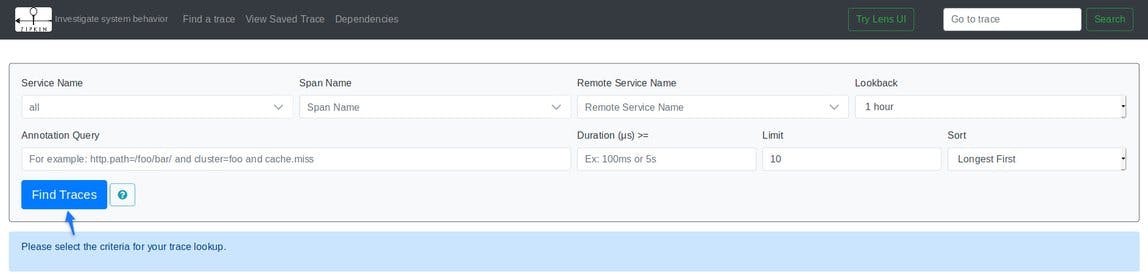
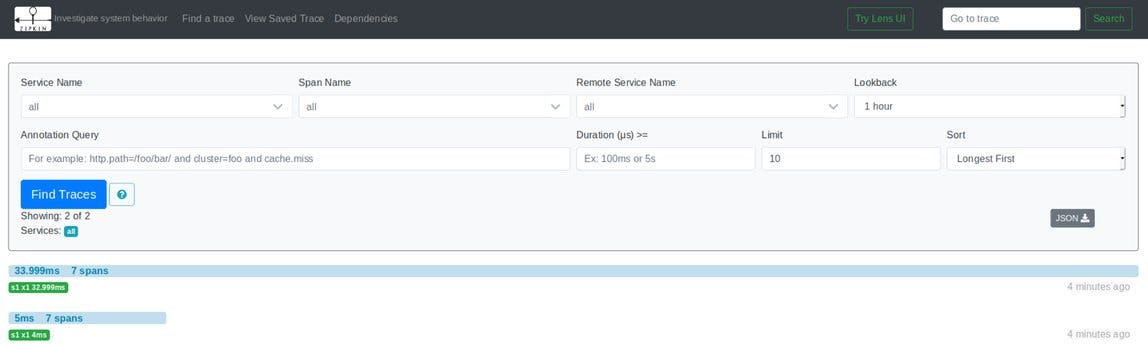
To display Traces, click "Find Traces", as shown above. The following screen will list all traces matching the search criteria:
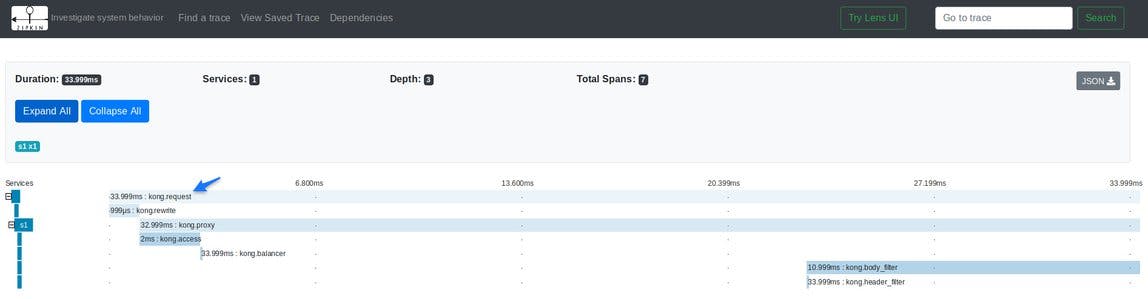
A trace can be expanded by clicking into it:
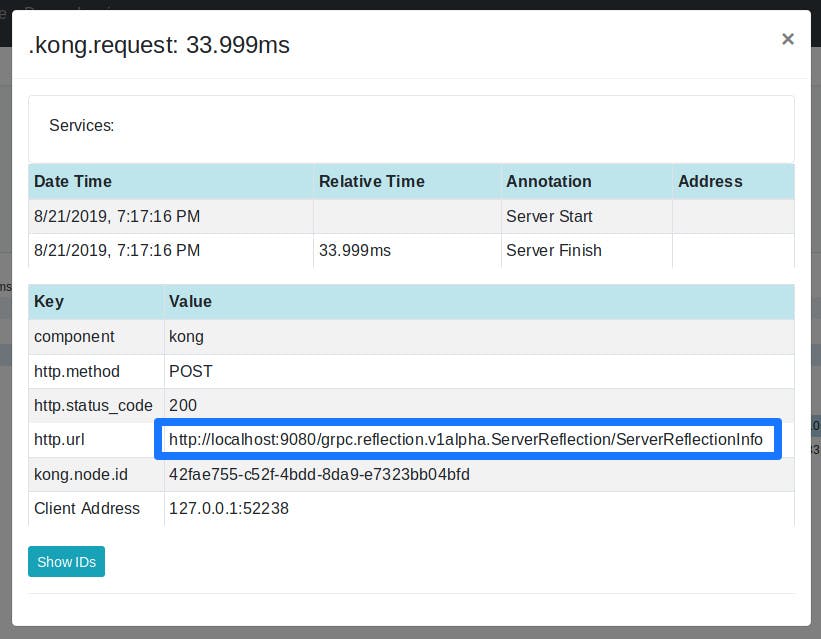
Spans can also be extended, as displayed below:
Notice that, in this case, it’s a span for a gRPC reflection request.
## What’s Next for gRPC support?
Future Kong releases will include support for natively handling Protobuf data, allowing gRPC compatibility with more plugins, such as request/response transformer.
**Have questions or want to stay in touch with the Kong community? Join us wherever you hang out:**
Viktor Gamov also contributed to this post.
In recent decades it's become common for communication between backend services to employ HTTP APIs with JSON payloads. Many HTTP APIs adhere (or at least aspire) to REST Principles, though many fall into
A developer portal is a storefront to your APIs (the products) that internal and external developers are trying to consume. The Kong Developer Portal provides a single source of truth for all developers to locate, access and consume services. With
Sven Walther
# Why Your Kafka Event Streams Need an Event Gateway
You wouldn't expose a REST API without a gateway. What about Kafka?
Before we talk about an event gateway, it's worth grounding ourselves on what an event is. An event is simply a record of something that happened. In modern integration, there are
Most APIs today are accessed over the ubiquitous HTTP protocol and the framework to create these APIs is known as REpresentational State Transfer (REST). These APIs are known as RESTful APIs . However, if you've been working in API development over
Kong
# Introducing Kong Enterprise 2.8 Long-Term Support
Kong is proud to announce our first-ever Long Term Support (LTS) version of Kong Enterprise. Kong Enterprise 2.8 LTS will be supported up to March 25, 2025. LTS is an industry term for a software release that is supported for a longer period of ti
We’re happy to announce the general availability of Kong Enterprise 3.2. In this release, we've taken significant steps to ensure the smooth and reliable operation of our API management solution. In Kong Enterprise 3.2, we've delivered key functio
We're excited to announce the general availability of Kong Enterprise 3.1. In Kong Enterprise 3.1, we build on the foundation of our plugin ecosystem by introducing five new plugins and enhancing the functionality of existing ones. These include:
Viktor Gamov also contributed to this post.
In recent decades it's become common for communication between backend services to employ HTTP APIs with JSON payloads. Many HTTP APIs adhere (or at least aspire) to REST Principles, though many fall into
A developer portal is a storefront to your APIs (the products) that internal and external developers are trying to consume. The Kong Developer Portal provides a single source of truth for all developers to locate, access and consume services. With
Sven Walther
# Why Your Kafka Event Streams Need an Event Gateway
You wouldn't expose a REST API without a gateway. What about Kafka?
Before we talk about an event gateway, it's worth grounding ourselves on what an event is. An event is simply a record of something that happened. In modern integration, there are
Most APIs today are accessed over the ubiquitous HTTP protocol and the framework to create these APIs is known as REpresentational State Transfer (REST). These APIs are known as RESTful APIs . However, if you've been working in API development over
Kong
# Introducing Kong Enterprise 2.8 Long-Term Support
Kong is proud to announce our first-ever Long Term Support (LTS) version of Kong Enterprise. Kong Enterprise 2.8 LTS will be supported up to March 25, 2025. LTS is an industry term for a software release that is supported for a longer period of ti
We’re happy to announce the general availability of Kong Enterprise 3.2. In this release, we've taken significant steps to ensure the smooth and reliable operation of our API management solution. In Kong Enterprise 3.2, we've delivered key functio
We're excited to announce the general availability of Kong Enterprise 3.1. In Kong Enterprise 3.1, we build on the foundation of our plugin ecosystem by introducing five new plugins and enhancing the functionality of existing ones. These include:
Viktor Gamov also contributed to this post.
In recent decades it's become common for communication between backend services to employ HTTP APIs with JSON payloads. Many HTTP APIs adhere (or at least aspire) to REST Principles, though many fall into
A developer portal is a storefront to your APIs (the products) that internal and external developers are trying to consume. The Kong Developer Portal provides a single source of truth for all developers to locate, access and consume services. With
Sven Walther
# Why Your Kafka Event Streams Need an Event Gateway
You wouldn't expose a REST API without a gateway. What about Kafka?
Before we talk about an event gateway, it's worth grounding ourselves on what an event is. An event is simply a record of something that happened. In modern integration, there are
Most APIs today are accessed over the ubiquitous HTTP protocol and the framework to create these APIs is known as REpresentational State Transfer (REST). These APIs are known as RESTful APIs . However, if you've been working in API development over
Kong
# Introducing Kong Enterprise 2.8 Long-Term Support
Kong is proud to announce our first-ever Long Term Support (LTS) version of Kong Enterprise. Kong Enterprise 2.8 LTS will be supported up to March 25, 2025. LTS is an industry term for a software release that is supported for a longer period of ti
We’re happy to announce the general availability of Kong Enterprise 3.2. In this release, we've taken significant steps to ensure the smooth and reliable operation of our API management solution. In Kong Enterprise 3.2, we've delivered key functio
We're excited to announce the general availability of Kong Enterprise 3.1. In Kong Enterprise 3.1, we build on the foundation of our plugin ecosystem by introducing five new plugins and enhancing the functionality of existing ones. These include:
Syed Mahmood
## Ready to see Kong in action?
Get a personalized walkthrough of Kong's platform tailored to your architecture, use cases, and scale requirements.