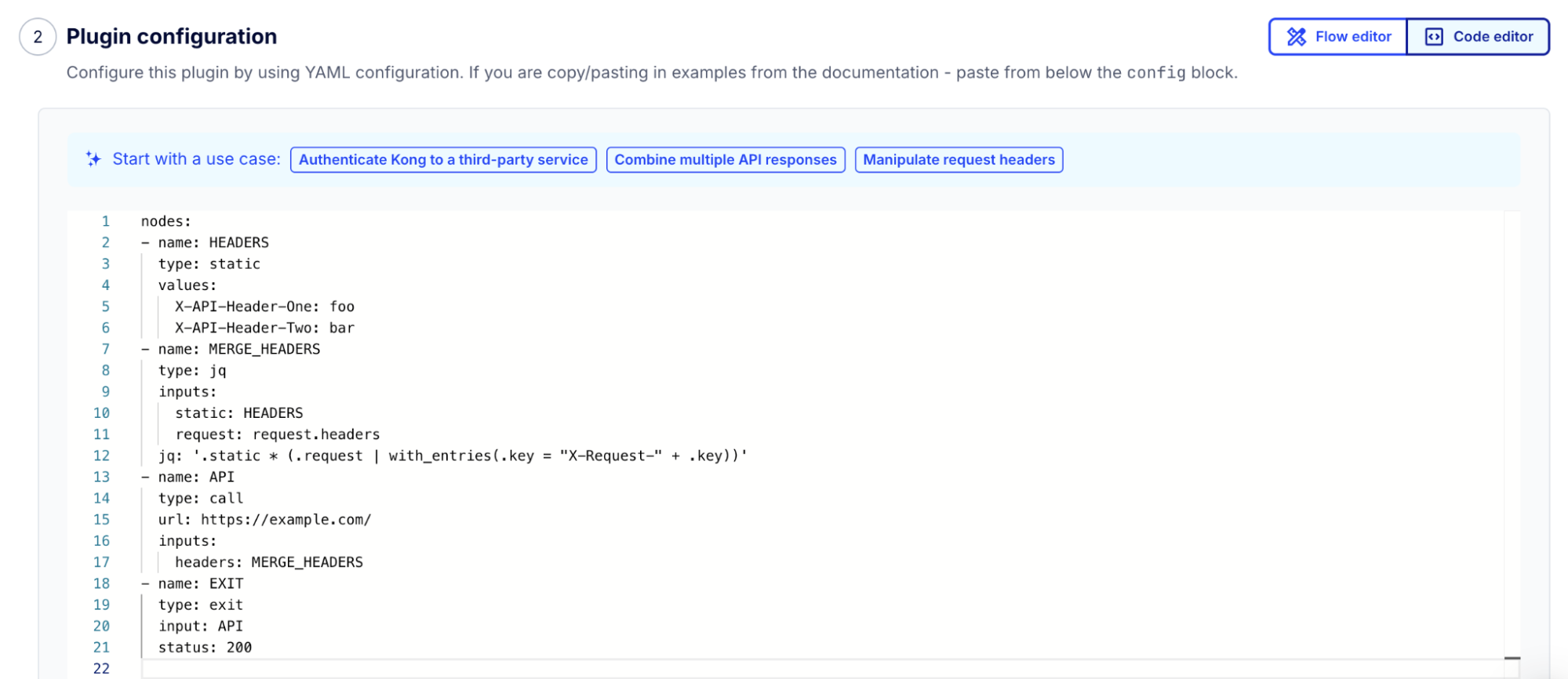
The question isn't which approach is better — it's which approach works best for your team's needs, preferences, and workflows. The Flow Editor ensures that teams preferring visual tools have an excellent option available.
## Getting started
Organizations typically adopt the Flow Editor in one of several ways:
- - **For new teams**: Start with the visual editor to learn Datakit concepts quickly, then choose whether to continue visually or transition to configuration files based on team preference.
- - **For existing implementations**: Import current configurations to create visual representations, useful for documentation, review, and understanding complex workflows.
- - **For specific use cases**: Use the visual editor for particular scenarios—prototyping, cross-team communication, troubleshooting—while maintaining configuration-based workflows for other purposes.
- - **As a team preference**: Some teams simply prefer visual tools. The Flow Editor provides a complete, production-ready workflow development environment for those teams.
There's no prescribed path. Different organizations find different approaches valuable based on their team composition, processes, and preferences.
## Learn more at API Summit 2025
Whether you're new to Datakit and looking for an accessible entry point, managing complex workflows that benefit from visual representation, facilitating cross-team collaboration, or simply prefer working with visual tools, the Flow Editor provides a capable, production-ready option.
If you want to learn more, make sure to register for API Summit — [either in person in New York](https://konghq.com/events/conferences/api-summit?utm_medium=blog&utm_source=reason-7&utm_campaign=api-summit)either in person in New York[](https://konghq.com/events/conferences/api-summit/register-now) or [virtually](https://konghq.com/events/conferences/api-summit/virtual)virtually. We hope to see you there!