# How DELTA Fiber Achieved a 60% Cost Reduction With Kong
60%
reduction in development costs
3 months
to develop the MijnDELTA app
"Kong delivered for us the perfect solution."


- Telecommunications
- Europe
- Development Productivity
- Innovate Faster
- Reduce Cost and Improve Efficiency
- Security
## Powering the Netherlands’ fastest internet with a future-proof architecture
DELTA Fiber is one of the Netherlands’ leading telecommunications companies, operating as both a network provider and internet service provider (ISP). Backed by more than a billion dollars in infrastructure investment, DELTA Fiber has built one of the fastest fiber networks in the world, connecting approximately 1.7 million homes and offices across the country. The company serves around 600,000 customers with a workforce of 1,200 employees, delivering high-performance connectivity in one of Europe’s most competitive telecom markets.
Operating in a densely populated country with mature digital infrastructure, DELTA Fiber faces intense competition. From a business standpoint, its strategy is twofold: continue building the best fiber network in the Netherlands and serve multiple customer segments — retail consumers, wholesale telecom partners, and large B2B enterprises. Each segment comes with different expectations, especially when it comes to service-level agreements (SLAs).
“Residential customers are more best-effort,” explained Ben van Leliveld, Program Manager IT, DELTA Fiber, at [API Summit 2025](https://konghq.com/blog/news/api-summit-2025-recap)API Summit 2025. “But for B2B and wholesale customers, it’s a completely different playing field. The SLAs are strict, and reliability is non-negotiable.”
Meeting those expectations required more than network excellence. It demanded a modern, flexible IT architecture capable of supporting rapid innovation, strong security posture, and long-term scalability.
## The need for speed, efficiency, and modernization
DELTA Fiber needed to accelerate its time to market, strengthen API security, and reduce development costs to stay competitive in the fast-moving telecom industry.
### Modernizing a complex, multi-layer telecom architecture
DELTA Fiber operates a highly structured, multi-layer architecture. At the foundation is the physical fiber network — cabling, infrastructure, and passive components. Above that sits the active network layer, where wholesale partners connect. At the top is the ISP services layer, supporting CRM systems, billing platforms, customer portals, and digital services used by retail and business customers.
As the company expanded its digital offerings, one application became pivotal: the customer self-care environment. This portal enables customers to view invoices, manage settings, upgrade services, and interact with DELTA Fiber digitally. However, the system was built as a monolithic application, limiting agility and slowing innovation.
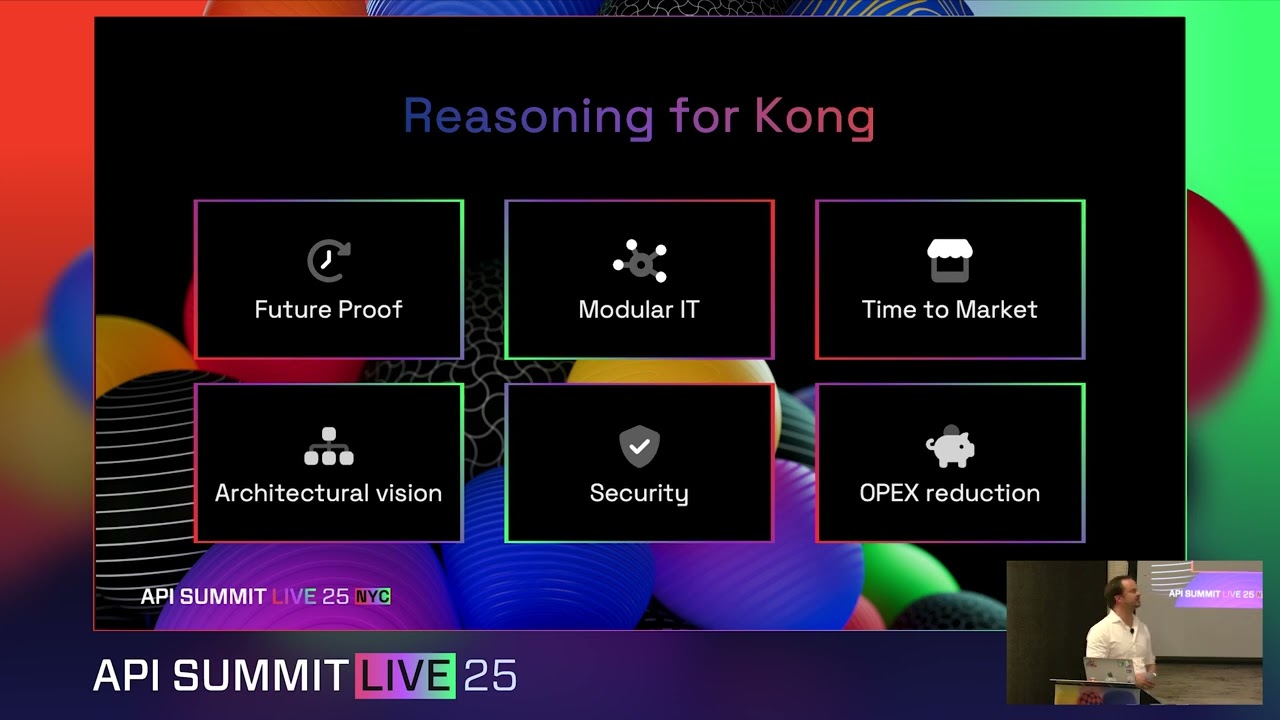
From an architectural perspective, the team wanted to decouple the front end from the back end and expose services through APIs. That shift required a modern API gateway that could deliver:
- - Strong, standardized security (OAuth, OpenID Connect)
- - High performance and low latency
- - Faster time to market in a highly competitive industry
- - A foundation for future AI and data-driven use cases
At the same time, the organization faced another challenge: tool sprawl. Multiple gateways were already in use across the IT landscape, increasing operational complexity and cost.
“We’re in a very competitive market,” Leliveld said. “Time to market is really important. We need to launch products in weeks, sometimes even faster.”
DELTA Fiber needed a single, enterprise-grade API platform that could simplify architecture, reduce costs, and support future innovation without compromising security or reliability.
## Empowering innovation with Kong
By implementing Kong Konnect and a cloud-native API management platform, DELTA Fiber centralized security and streamlined development across teams.
The first use case was deliberately chosen: the customer self-care environment. It was customer-centric, performance-sensitive, and security-critical — making it an ideal proving ground.
“Kong is a very technical product,” said Barry Dessing, Team Manager - Middleware Development. “So we needed a use case that business owners could immediately understand and support. Security and customer experience made that conversation easy.”
The implementation had to be completed in three months, starting in November 2024 and finishing in February 2025, right through the holiday season. The internal team had little prior experience with Kong, yet they were responsible for delivering a production-ready platform.
To overcome this, DELTA Fiber and Kong adopted a trainer-to-trainer model. Over eight intensive weeks, the team participated in daily learning sessions and hands-on workshops. What they built during training directly fed into the minimum viable product (MVP).
Automation became a priority from day one. The team built pipelines to deploy infrastructure and automatically onboard APIs, enabling developers to work self-service-style. Observability was integrated using Datadog, and a structured backlog was created to guide future enhancements, such as gateway hardening and advanced security controls.
“We approached this as a true DevOps team,” Dessing said. “Automation, ownership, and tight collaboration with front-end, back-end, and identity teams were key.”
## Faster, smarter, and more secure outcomes
The company launched its new MijnDELTA app in just three months and cut development costs by approximately 60%, achieving faster, more secure innovation for customers and developers alike.
Compared to a similar initiative delivered the previous year using a traditional approach, the Kong-powered implementation delivered:
- - 300% faster time to market
- - 60% reduction in development costs
- - Significantly lower latency—up to 10X faster than the previous ESB-based solution
- - A secure, penetration-tested API layer with zero critical findings
Latency improvements were especially significant. In a self-care environment where every interaction impacts customer perception, performance gains are translated directly into better digital experiences.
Security outcomes were equally strong. During mandatory penetration testing and bounty hunting exercises, testers initially couldn’t access the APIs at all — because Kong’s security controls were doing exactly what they were designed to do.
“That was actually a great moment,” Leliveld said. “It proved the platform was secure by default.”
Beyond metrics, the project achieved broad internal recognition from both IT and business leadership. The success validated the decision to standardize on Kong and paved the way for the next phase: migrating all DELTA Fiber APIs onto the Kong platform.
"We were striving to decrease our development costs. And we succeeded and became approximately sixty percent less costly. Kong delivered for us the perfect solution."
## What's next?
With Kong in place, DELTA Fiber is enabled to move faster and smarter. The company is actively planning for GenAI and agentic AI use cases, where APIs will act as the control layer between intelligence and infrastructure.
“Kong fits into our future-proof architecture,” Leliveld said. “And future-proof is about much more than one product; it’s about being ready for what’s coming next.”
Key lessons from the journey include the importance of organizational readiness, early impact assessment, and close alignment with agile delivery teams. But the biggest takeaway was clear: standardization, when done right, helps accelerate innovation.
DELTA Fiber's journey shows how a telecom provider operating at a national scale can modernize its digital foundation without disrupting the business. By introducing Kong as a unified API platform, the company transformed a monolithic customer system into a secure, high-performance, future-ready architecture.
The outcome: faster delivery, lower costs, stronger security, and a platform ready to support AI-driven innovation, now and for the years ahead.
More Customer Stories






“Partnering with Kong has greatly accelerated our API business and strategy.”


"Kong provides that single point of entry... [so] it’s easier for Aviva to manage all the traffic that comes through safely and securely."


30%
boost in efficiency


“Kong has supported our goal of moving fully to the cloud, streamlining business processes, automating wherever possible, generating actionable insights from data, and driving efficiency through the intelligent adoption of new technology.”


2 Billion
Requests on Super Bowl Sunday