# Insights from eBay: How API Ecosystems Are Ushering In the Agentic Era


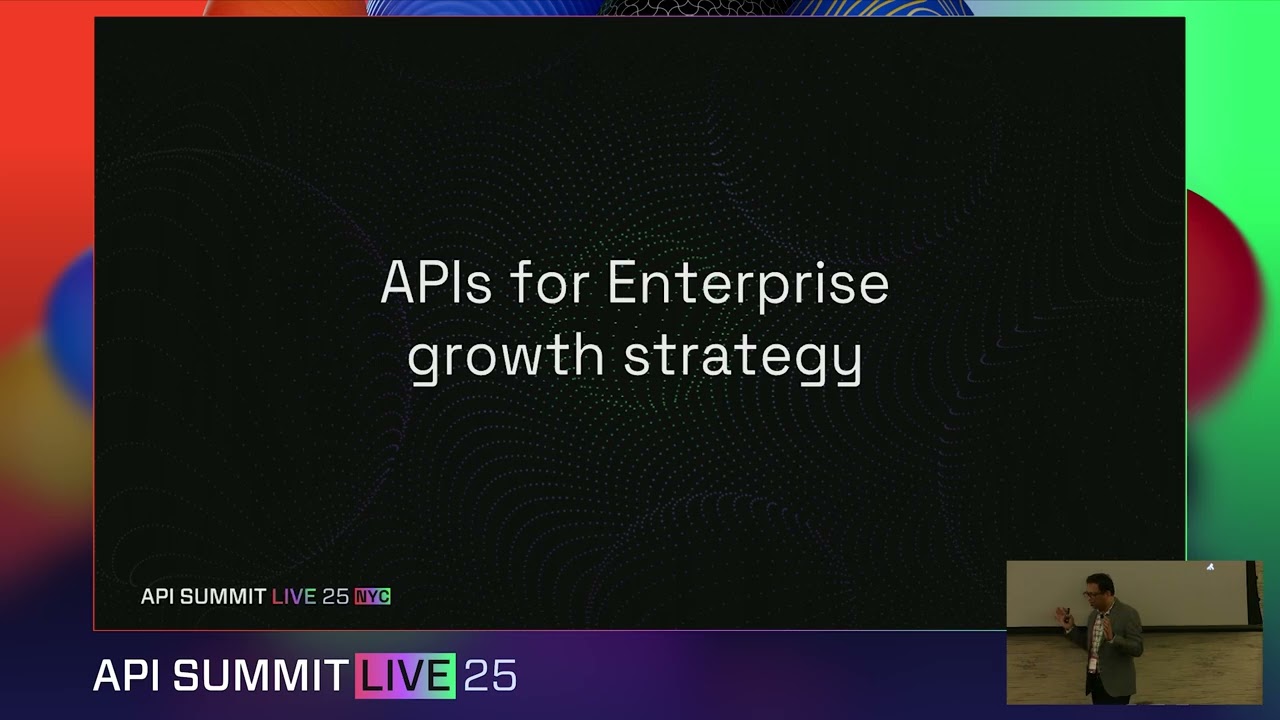
“API ecosystems are here to stay and grow… it depends on us to build the best possible API solutions.”
- Retail
- North America
- Developer Experience
- Governance
## APIs are the connective tissue of the modern digital economy
Every digital experience now depends on APIs. Uber doesn’t just exist because of its app; it exists because it orchestrates Google Maps, Twilio, identity services, payments APIs, and internal logistics endpoints into one seamless customer moment. Shopify's app ecosystem thrives because third-party developers can extend core commerce through public APIs that let niche use cases flourish. QuickBooks unlocked whole new customer bases when small-business developers began building solutions on top of its externalized APIs.
As Satav said, **“APIs… act as the data exchange highways, and if APIs weren’t here, it’s basically very difficult for these apps to stay so interconnected that we take for granted today. The digital world that we know… just cannot be imagined without APIs.”**
We’re living in a world where no single product solves the entire user journey. Users have multiple jobs to be done, like onboarding customers, managing vendors, executing payments, tracking orders, engaging buyers and so on. And the expectation today is that everything should work together by default.
APIs are what make that happen. They enable products to stop behaving like isolated tools and start acting like individual participants in an interconnected ecosystem. And that mindset shift transforms the role of APIs from a technical artifact into a growth engine.
But there’s a nuance here: API-led growth behaves differently from traditional product-led growth. Product managers obsess over funnels, activation moments, and churn. They A/B test checkout flows, optimize onboarding experiences, run continuous experiments, and refine UI until customers flow from sign-up to value with minimal friction.
In the API world, your “customers” aren’t end users, they’re developers. And developers don’t behave like traditional consumers. They don’t always have time to give feedback. They’re juggling multiple priorities. They treat API integration not as a discrete product interaction but as part of their long-tail workflow.
That means API product strategy needs new levers.
## The API growth funnel is real, but developers move through it differently
Just like customer funnels, API adoption funnels exist. But they’re simply optimized around different milestones:
- -
discovering and exploring the APIs
- -
making the first sandbox call
- -
exchanging test keys
- -
moving to production keys
- -
building and deploying real integrations
- -
offering feedback that refines the ecosystem
Satav said, **“You can’t do A/B testing in the traditional way… you can’t just release your APIs and expect people to give you feedback.”**
Instead, you must rely on:
- -
internal dogfooding
- -
carefully curated private betas
- -
a disciplined governance squad
- -
early-adopter developer cohorts
- -
clear documentation and SDKs
- -
API explorers and tooling that reduce friction
API explorers play the role that UI onboarding flows play in product-led growth. Documentation becomes the homepage. SDKs become the starter kit. And community — not just marketing — becomes the distribution network.
Truth be told, APIs don’t grow because they exist; they grow because ecosystems form around them.
That leads us to the next stage.
## Ecosystem-led growth: The real goal of API strategy
If a product-led strategy optimizes customer journeys, an API-led strategy optimizes developer value creation. Enterprises that externalize their APIs aren’t just shipping endpoints. They’re enabling third-party developers to:
- -
build niche solutions the company would never prioritize
- -
enter markets the company cannot reach
- -
innovate on top of complex data
- -
create experiences for local, segment-specific, or industry-vertical needs
One of the most compelling insights from Satav’s talk came from working with QuickBooks’ external APIs. **“There were so many corner cases which were solved by APIs… remote developers were developing applications for their particular customers… [reaching] markets which you never thought you would capture.”**
This is the promise of an ecosystem: you create value by enabling others to create value.
But ecosystems must be nurtured. They don’t sustain themselves by accident. Satav said, **“Do not underestimate the governance squad… it keeps external APIs streamlined and scalable.”**
That requires:
- -
developer councils
- -
hackathons
- -
structured communication channels
- -
long-term relationship building
- -
clear capability maps
- -
predictable versioning strategies
- -
thoughtful separation between internal and external APIs
Done well, the result is a landscape where both strategic partners and “lone wolf” developers can coexist. Strategic partners drive stability and revenue; independent developers unlock innovation and long-tail audience reach.
This is why [API monetization](https://konghq.com/blog/learning-center/what-is-api-monetization)API monetization shouldn’t be the first move. Monetization strategies — transaction-based, subscription, freemium, or revenue sharing — only work when ecosystem volume and trust reach maturity. But there's a deeper challenge in play.
## APIs aren’t easy, and AI is about to multiply the complexity
Shipping a UI-based product can take days. MVPs are quick, validation cycles are tight, and iteration loops are fast.
Satav said,**“Building an API-driven ecosystem is not easy. It has a much longer turnaround time.”**
Why? Because integrating an API is not a moment. It’s a commitment. Developers stitching your API into their core flows need stability, clarity, and predictability. They need testing sandboxes, schema consistency, and strong governance. They need to trust that once they build on your API, you won’t break their workflows or exceed their mental overhead.
This is the reason API-driven ecosystems have longer turnaround cycles and why leadership buy-in becomes critical. APIs require enterprises to make strategic choices:
- -
Are APIs viewed as tech enablers or business drivers?
- -
Are they a product or an extension of the product?
- -
How much internal capability should be made external?
- -
How much parity should internal and external APIs share?
And now layer AI into this mix.
## The agentic AI era amplifies APIs
API growth will continue to skyrocket over the next cycle of AI adoption. Why? Because every agent, every automation, every LLM-driven workflow needs to connect to real systems, real data, real actions.
If prompts are the new browser, APIs are the new hyperlinks.
And [MCP (Model Context Protocol)](https://konghq.com/blog/learning-center/what-is-mcp)MCP (Model Context Protocol) tools, the new meta-layer that lets agents converse with APIs, depend on strong API infrastructure underneath.
Agentic AI doesn’t eliminate APIs; it demands more of them for:
- -
real-time capabilities
- -
richer context
- -
standardized interaction patterns
- -
faster iteration
- -
clearer schemas
- -
lower integration friction
- -
stronger governance and version management
Enterprises that struggle with API fundamentals today will struggle tenfold when building agentic workflows tomorrow. The future of agentic AI isn’t just about the intelligence of the models. It’s about the completeness of the ecosystem behind them.
## How do we build infrastructure for the agentic internet?
How do we go about [building infra for the agentic internet](https://konghq.com/blog/enterprise/building-infra-for-the-agentic-internet)building infra for the agentic internet? From a broader industry direction, a roadmap emerges — not of technology alone, but of mindset.
- -
**Choose your strategy before you choose your stack. **Do you want more developers? Better developers? Strategic partners? Niche-market long-tail integrations? Internal alignment between teams? Trying to do everything at once dilutes impact.
- -
**Don’t ignore governance.** Your future ecosystem depends on it. Governance squads keep API design consistent, prevent schema drift, enforce quality, and ensure internal and external models don’t collapse into chaos.
- -
**Documentation isn't an accessory but the product. **For developers, docs aren’t a help center. They are the first touchpoint. They determine trust.
- -
**Test early, test internally, test with private betas.** You can’t A/B test APIs in production; you need structured validation cycles.
- -
**Decide how internal and external APIs will diverge (or don’t).** Parities matter, but so do enterprise boundaries.
- -
**Don’t externalize APIs for vanity; externalize for value.** If internal APIs are not consumer-ready, redesign them before exposing them.
- -
**Monetization must match maturity, not ambition.** Stripe can be API-first; Shopify uses APIs as indirect value drivers. Both models work but only with strategic clarity.
- -
**Prepare for agentic scale now, not later.** MCP, AI agents, and LLM orchestration are coming whether you’re ready or not.
As Satav said,**“API ecosystems are here to stay and grow… it depends on us to build the best possible API solutions.”**
And that brings us full circle.
## APIs are becoming the engine room of the agentic internet
The digital economy used to be powered by products. Then it shifted to platforms. Now, it is shifting again toward ecosystems orchestrated by APIs and operated by AI agents.
This means:
- -
Enterprises will see an explosion of API traffic.
- -
Developer adoption will become a priority metric.
- -
MCP-based integrations will become the norm.
- -
Agents will increasingly perform system-to-system automation.
- -
APIs will become more critical than the UI layer.
Where product-led growth focused on customers and product interactions, API-led ecosystem growth focuses on developers, partners, and the new automated agents that will navigate these ecosystems.
And this is the tipping point we’re entering.
The companies that excel in this next era will treat APIs not as endpoints, not as afterthoughts, and not as documentation artifacts — but as the backbone of how intelligent systems connect and create value.
In other words: APIs won’t just power the internet. They will power the agentic internet.
And the organizations that understand this and the ones already investing in governance, ecosystem building, developer experience, and scalable API infrastructure are the ones preparing to stay unconquerable in a world where prompts become the new browser and agents become the new users.
The future is ecosystem-led. And it’s being built through APIs today.
More Customer Stories








30%
boost in efficiency


“Kong has supported our goal of moving fully to the cloud, streamlining business processes, automating wherever possible, generating actionable insights from data, and driving efficiency through the intelligent adoption of new technology.”


2 Billion
Requests on Super Bowl Sunday


Global payments leader streamlines API governance, accelerates delivery, and explores agentic automation through spec-first design and Model Context Protocol (MCP).
[Read the full story](https://konghq.com/customer-stories/verifone-apiops-developer-workflows-kong)Read the full story