As AI adoption scales, applications evolve into complex systems of agents, orchestration layers, and context servers. Infrastructure lags behind — struggling with authentication, cost control, and data security across a provider list that changes every quarter.
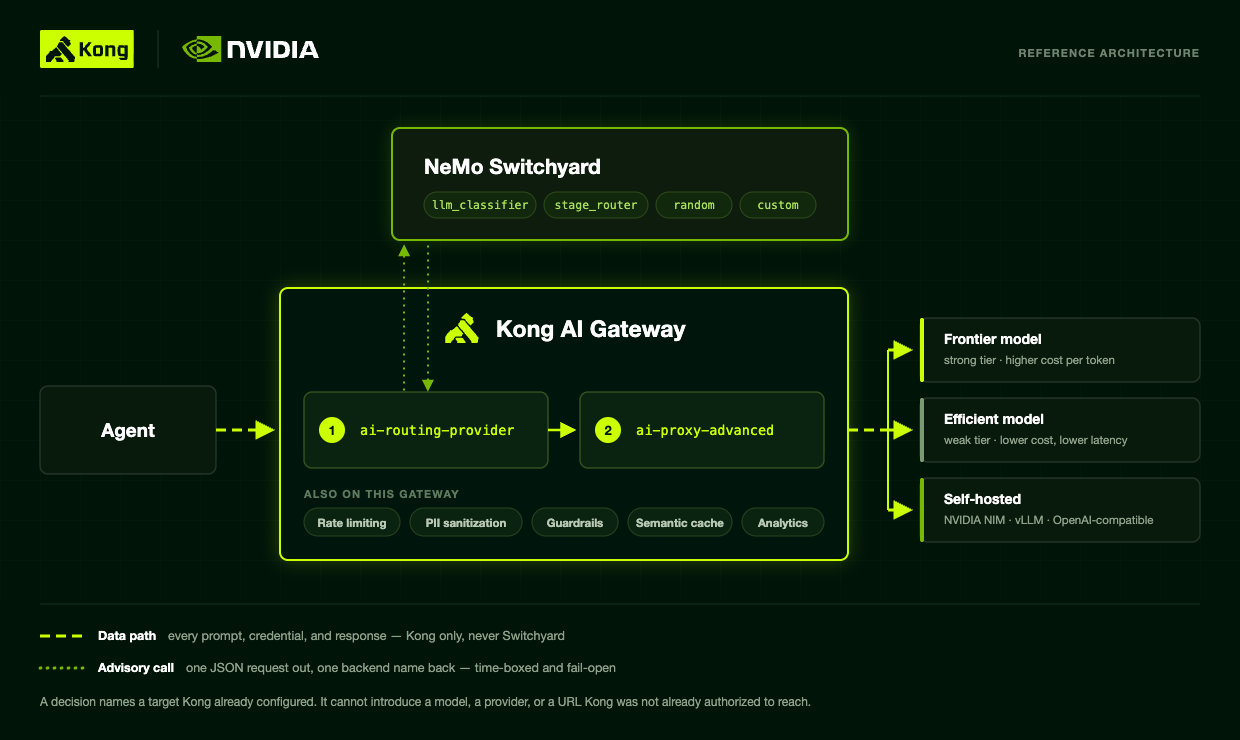
Kong AI Gateway is the runtime for LLM traffic management those systems already run through. Its Universal API standardizes interfaces across providers, decoupling applications from provider-specific SDKs and centralizing credential management as part of a broader AI governance strategy. On top of that, the gateway enforces what production actually requires:
- - **Token-based rate limiting and metering** per team, application, and model - the control that caps AI spend, not just optimizes it
- - **Credentials in a vault, never in application code**, rotated centrally across every provider
- - **PII sanitization and prompt guardrails** applied before a request ever leaves your network
- - **Semantic caching** to eliminate redundant inference entirely
- - **Model and provider routing, with multi-provider failover, retries, and load balancing** — the traffic layer that survives a provider outage
- - **One control plane for APIs, AI, MCP, and events**, with RBAC, audit, and analytics across all of it
- - **Highly scalable, performant dataplanes that support hybrid, self-hosted, and air-gapped environments** — providing teams architectural freedom
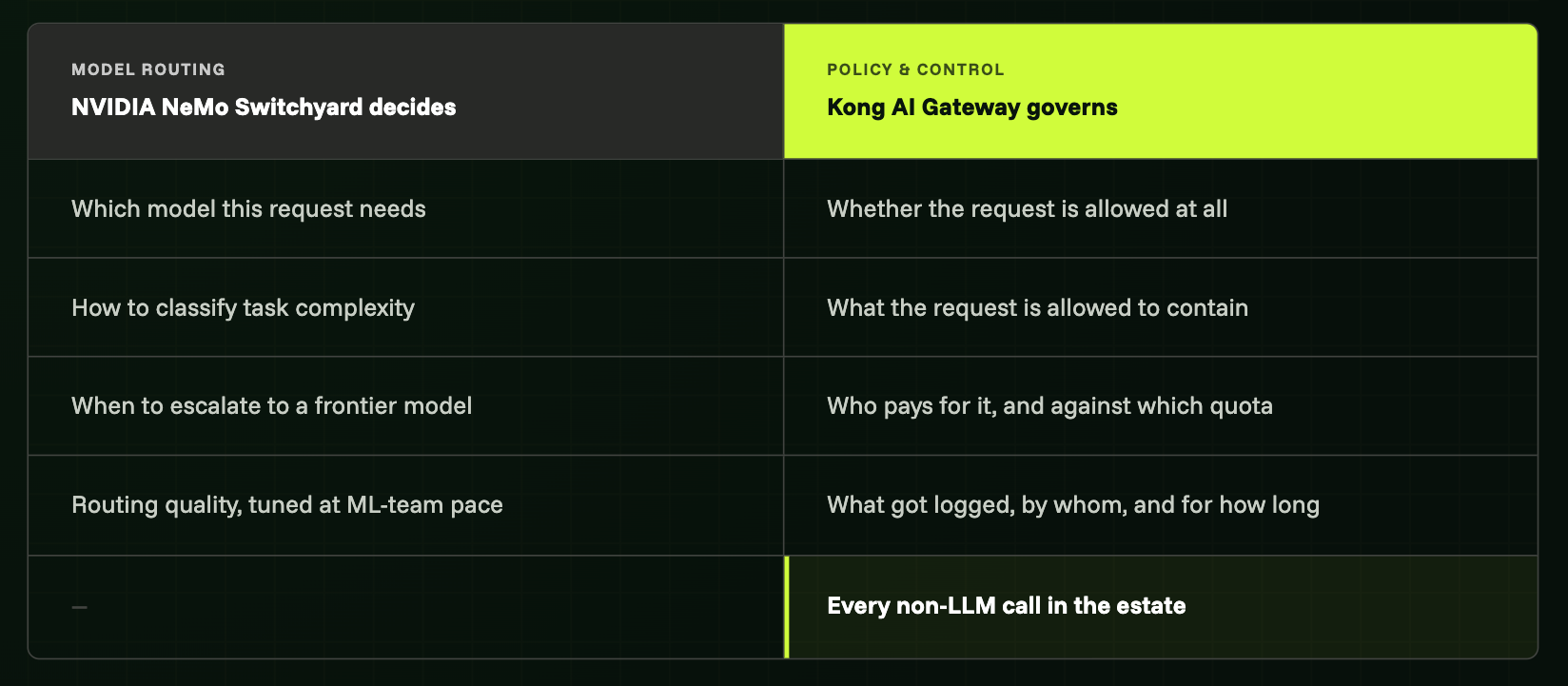
That last pair matters more than it looks. Your agents don't only call models — they call REST APIs, MCP servers, and event streams. Governing the LLM hop alone leaves most of the attack surface ungoverned. Further, an enterprise network is complex, with workloads running on-prem, across clouds, etc.