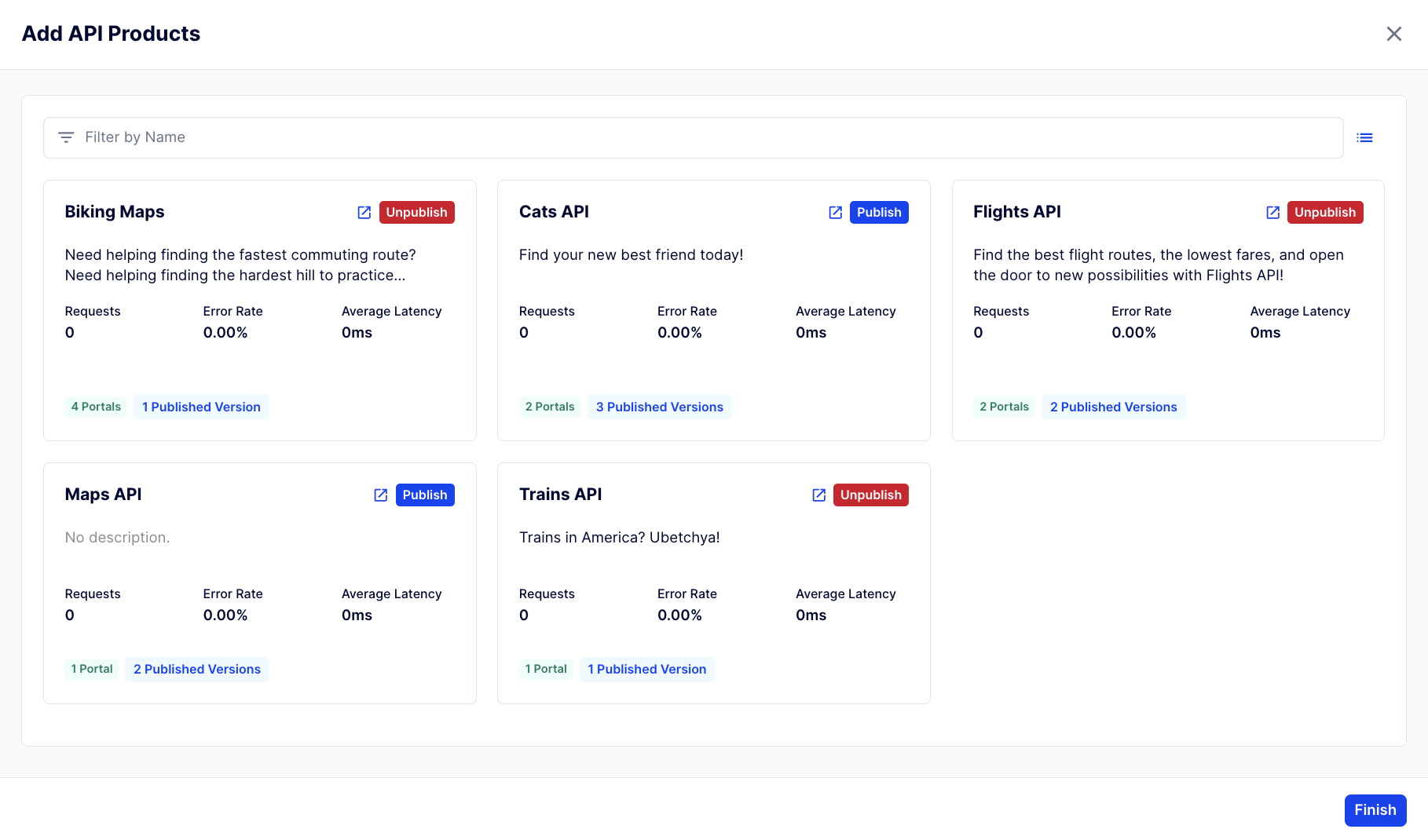
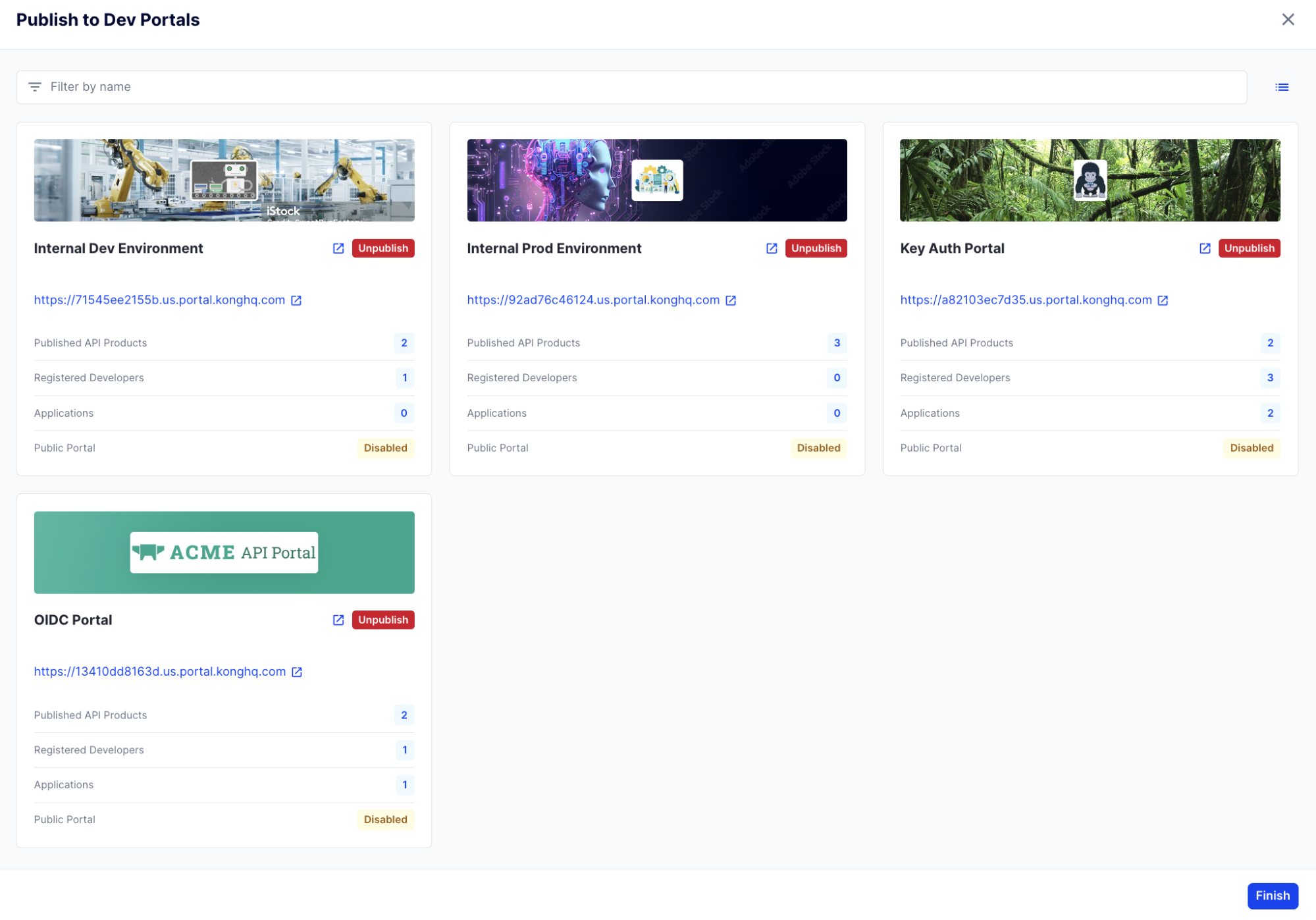
Efficiently managing your developer portal is critical in productizing your APIs quickly and reliably. A streamlined developer portal ensures that your APIs are easily accessible, well-documented, and secure — driving higher adoption and easier integration. With the increasing demand for APIs across business units, brands, partners, and more, a single developer portal often falls short for both the API owner and the consumers by introducing complexity and slowing productization efforts.
Recognizing these challenges, we're excited to announce the availability of Multiple Portals and Multi-Authentication functionalities as part of the Developer Portal in Kong Konnect. This powerful self-service feature set is designed to provide customers with the flexibility to accelerate their API productization efforts.
## Enhance your API productization with Kong Konnect Developer Portal
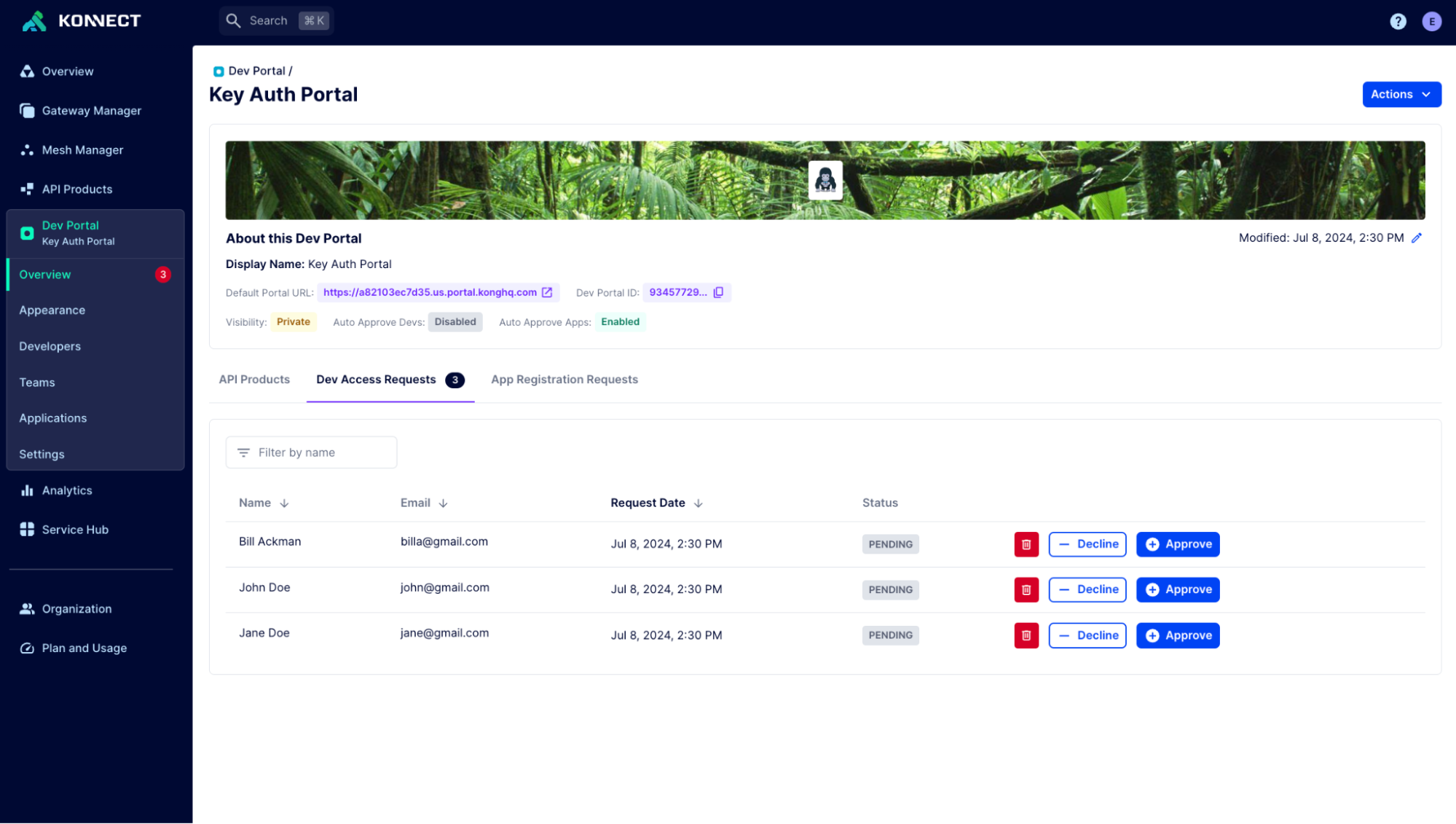
The Kong Konnect Developer Portal is a customizable and secure storefront where developers can discover, browse, and test API endpoints with ease. It streamlines API productization with easy publishing, robust security, and automated client registration. Supporting both internal and external APIs, the portal enhances developer productivity through self-service API key management and even offers performance insights with contextual analytics. Plus, it ensures a consistent and branded user experience without needing extensive web development skills.
Your developer portal is where you productize your APIs by publishing documentation, up-to-date specs, onboarding documentation, adding API versioning and lifecycle management, and more. If you’re in the business of APIs, your developer portal is the front door for your developer audience to find and consume your API products. As your developer audience grows and segments into various use cases, managing a single storefront that caters to different API consumers becomes increasingly complex and time-consuming. On the flip side, navigating a labyrinth of overly complex and irrelevant APIs, specs, and documentation induces a cumbersome user experience. These obstacles can impede your organization’s API productization by slowing down API adoption, resulting in lower revenue from API usage.
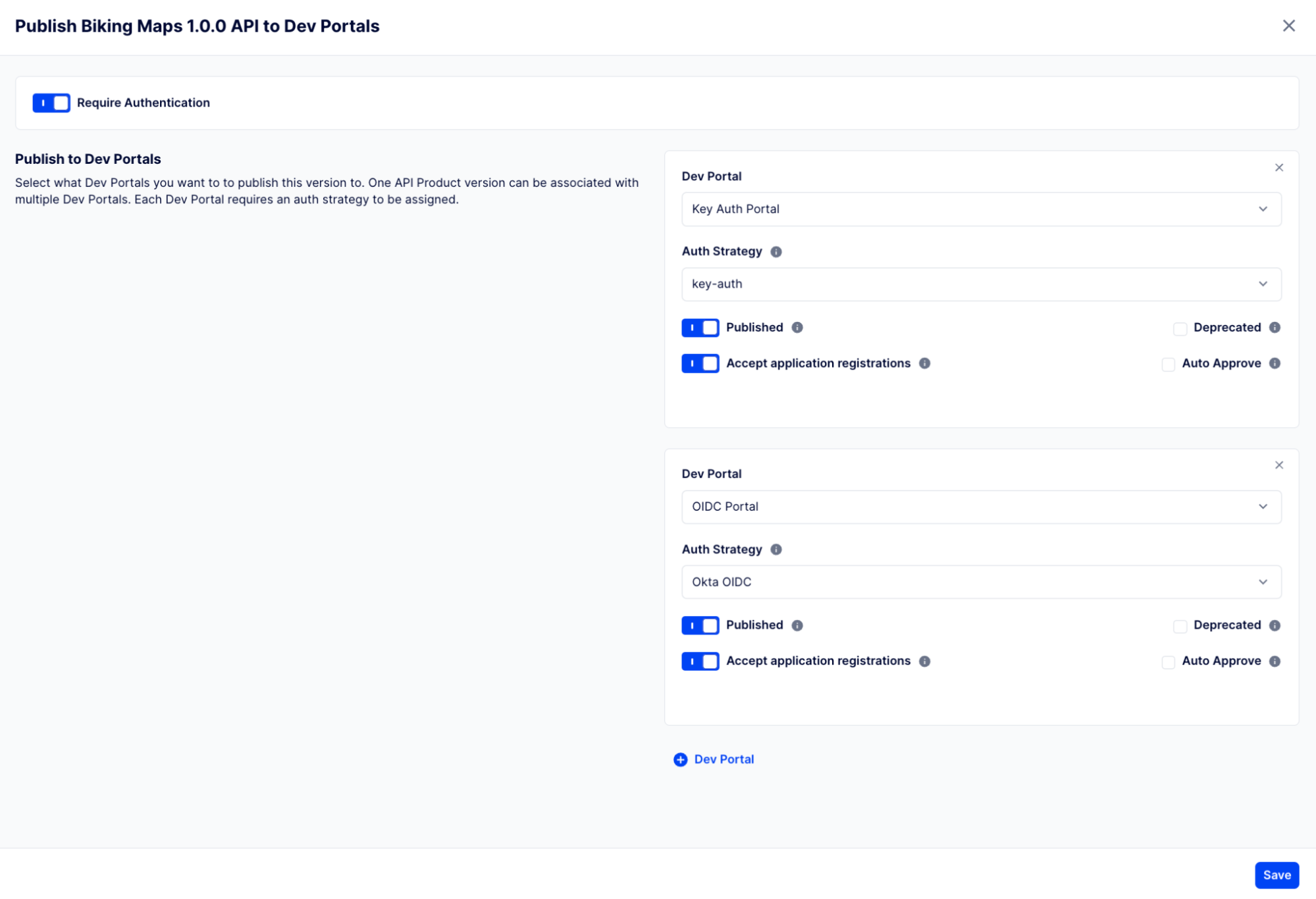
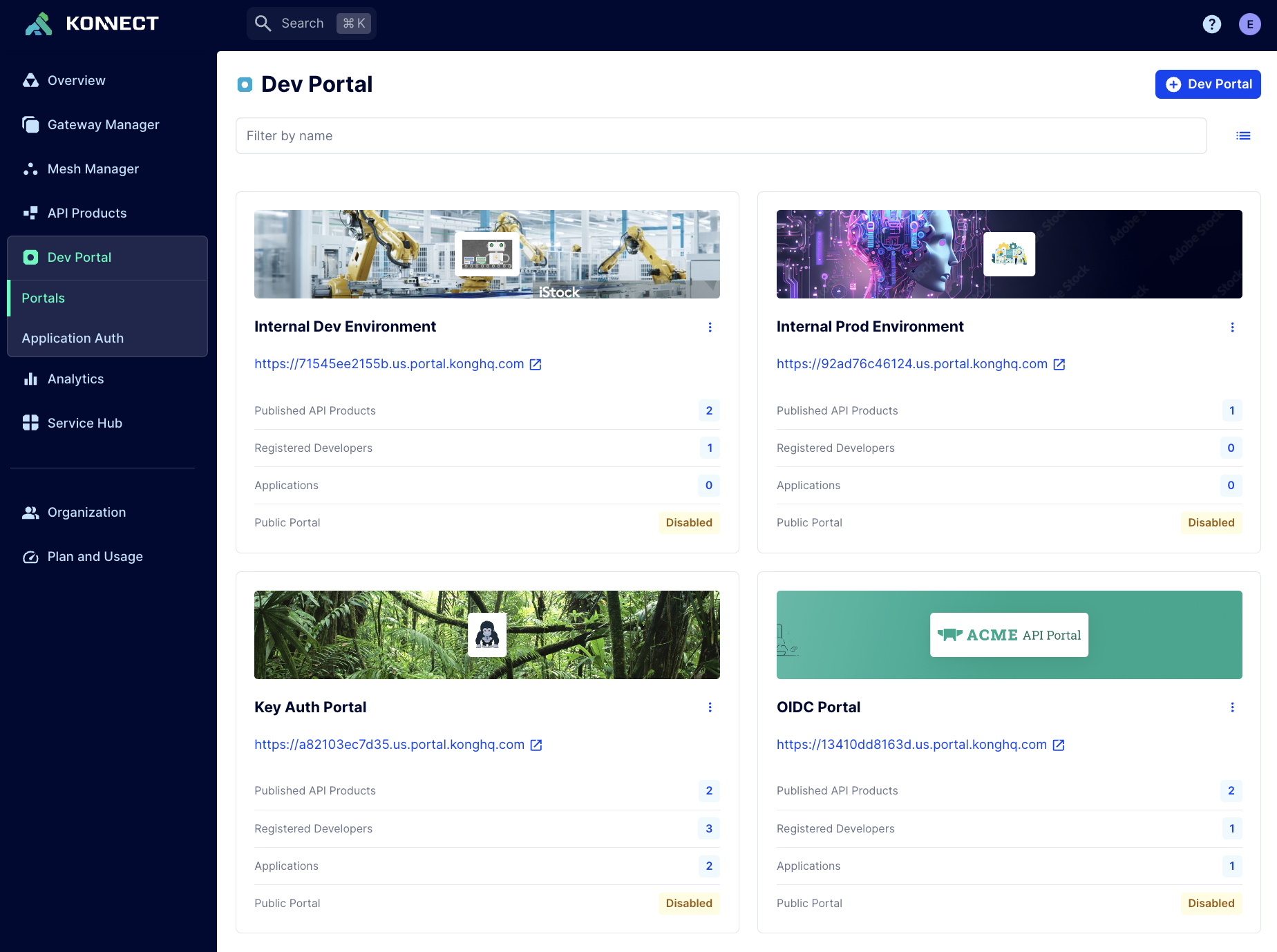
With Multiple Portals now available in Konnect, API product and developer teams can tailor each portal for a specific audience, environment, or even an occasion (e.g., hackathon or a summit). Segmenting portals by use case helps API publishers organize and offer the most relevant API products for each audience. This significantly streamlines API productization and improves the consumption experience for end users as well. To streamline API productization further, Kong offers a new multi-authentication feature that allows API owners to publish the same API product across multiple portals with different authentication schemes. Portal admins can even set a default application auth strategy per portal, streamlining the API owner’s ability to publish their APIs across multiple portals without needing to think about how to manage application authentication. With multiple portals and multi-authentication, Konnect users will enjoy the best functionality that Kong Konnect Developer Portal has to offer with added customization and flexibility.
## Customizable flexibility for a great self-service experience
With the ability to launch multiple developer portals in Kong Konnect, your organization can segment and map different business entities, partner tiers, and/or development stages with different developer portals, based on your specific requirements. This differentiated portal approach streamlines API publishing by use case and provides a well-organized, easy-to-navigate end-user experience. Each developer portal can be branded and tailored to meet the specific look and feel of your different environments, tiers, or brands.
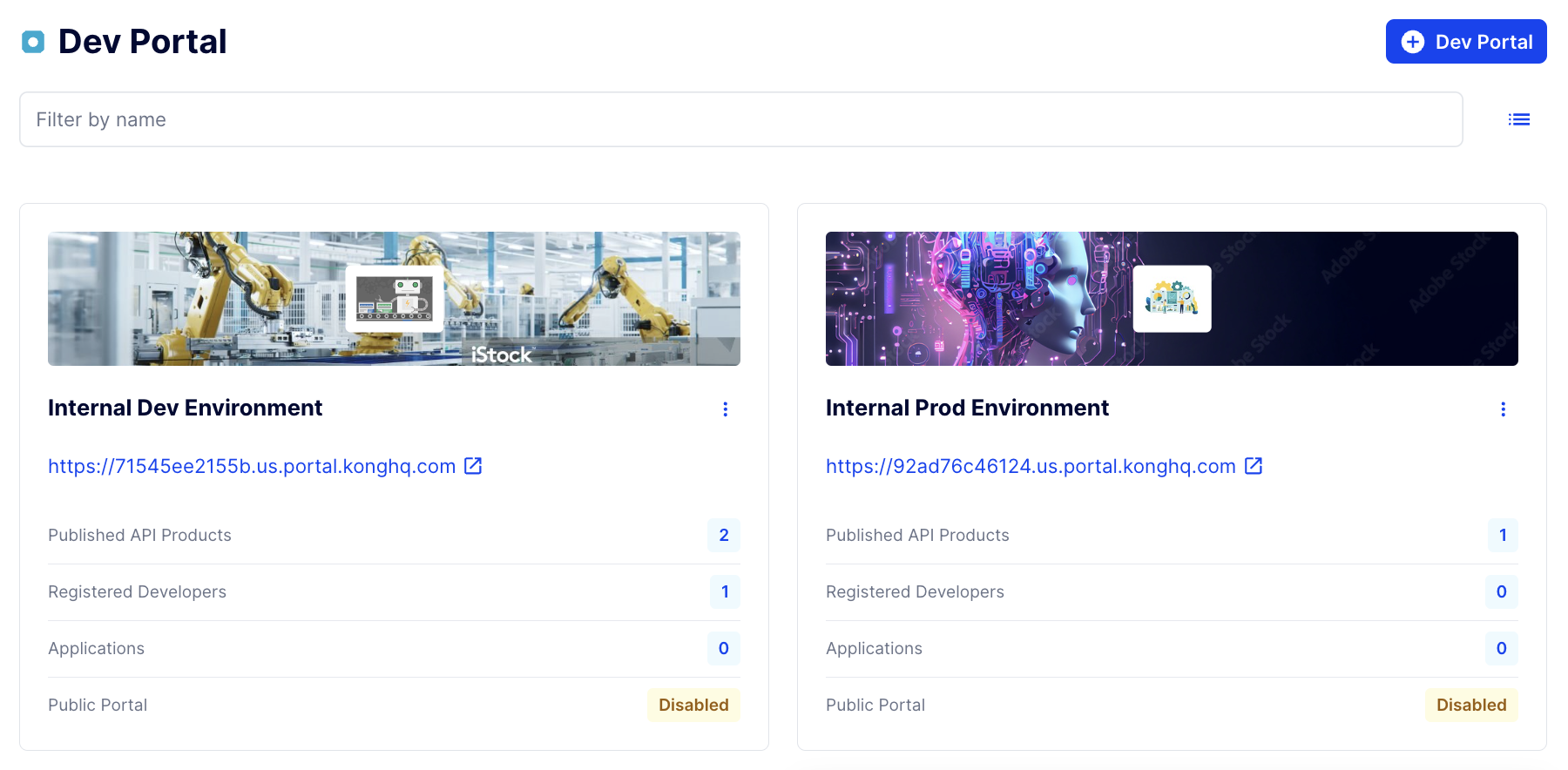
Let’s say an organization has two portals, each designated to two different environments: Dev and Prod. The Dev environment portal is used for testing and staging new APIs, while the Prod environment portal contains only the tested and customer-ready APIs.