# How to Secure APIs and Services Using OpenID Connect
Sven Walther
A modern API gateway like [Kong](https://konghq.com)Kong enables organizations to achieve some use cases much more easily than traditional gateways. The reason is older, traditional gateways try to provide as many features as possible into a heavyweight monolith, while modern solutions use a best-in-breed approach. These traditional solutions not only try to be a gateway, but they also try to be a business intelligence system, a central logging hub, a monitoring tool and so much more. Unfortunately, this leads to a solution that on paper can do many things but not do one thing particularly well.
A more tactical approach is to leverage best-in-breed solutions that integrate well with each other and are simple to use. Kong's platform delivers on this approach and provides a modern gateway that's fast, scalable, easy to use and can easily integrate with other platforms through its pluggable architecture. In this blog post, we will cover how easily Kong integrates with existing identity providers (IdPs) to help secure and govern APIs.
Let’s think about a very typical customer scenario we come across: you have a central IdP as the identity manager and central point of truth for authentication as well as groups/permissions of users. A legacy gateway approach would use the IdP for authentication and then in the gateway, you define authorization per endpoint to the groups you want to grant access to the backend services.
This design has two flaws:
- To attach the users to groups, they must exist in the gateway so you end up having to manage consumers in the gateway.
-
Administrators have to maintain group memberships in the Gateway to grant or revoke permissions.
## A Better Approach with Kong
With Kong, you can leverage the IdP for both authentication and authorization without having to manage consumers or groups in Kong, giving you the ability to leverage your IdP to drive access without additional operational overhead and risk. To do this, we can configure Kong to use OpenID Connect groups to attach [scopes](https://auth0.com/docs/scopes/current/oidc-scopes)scopes to the users and let Kong provide access based on the scopes in the JWT tokens. This solves both issues at the same time, and the administration of users and their permissions are now located where they should be: in the IdP.
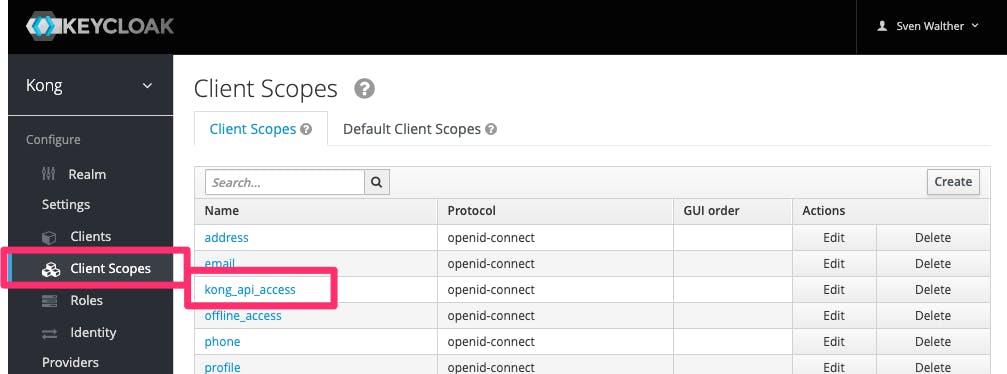
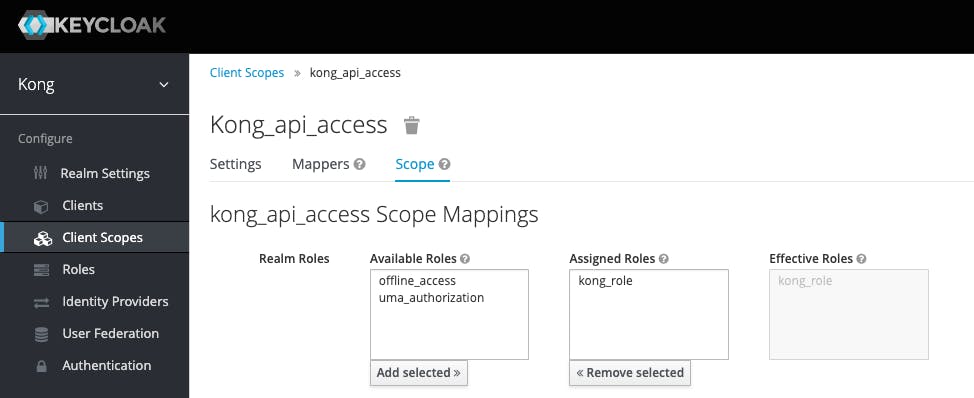
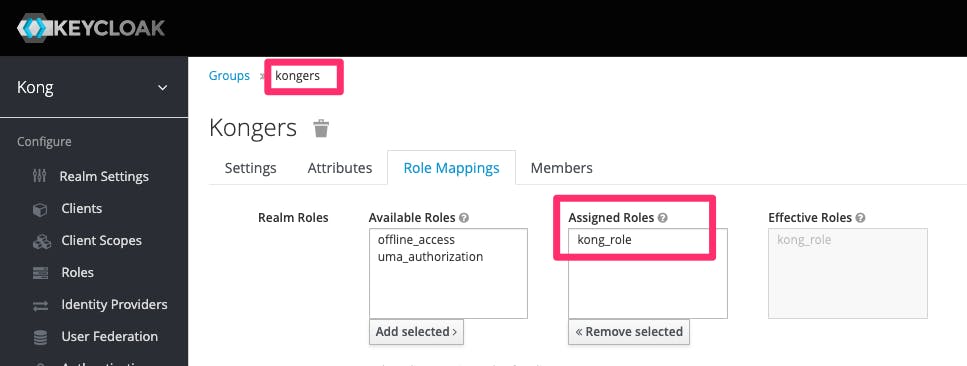
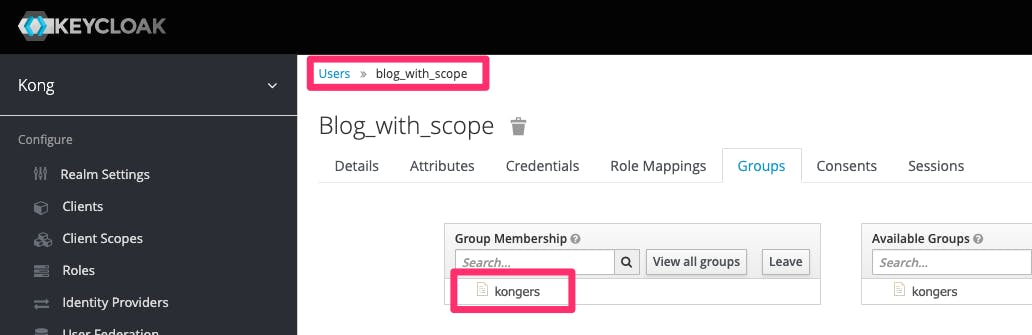
In order to achieve this, we are going to walk through an example of how to secure APIs and services using OpenID Connect with KeyCloak as an example. Within KeyCloak, the first thing is creating a new scope, attaching it to a group and then attaching this group to a user:
### Keycloak scope creation
### Keycloak scope and role mapping
### Role to group mapping
### User to group mapping
## Kong Enterprise settings
Note: I am using [httpie](https://httpie.org)httpie as my command line tool of choice – feel free to use Studio, Insomnia, curl, etc. instead.
Let's begin by creating a service and route in Kong for validation. Replace localhost with the hostname of your Kong installation.
### Service and route
`http POST localhost:8001/services name=openidconnect url=http://httpbin.org/anything`
`http POST localhost:8001/services/openidconnect/routes name=openidconnectRoute paths=/oidc -f`
### OpenID Connect plugin
OK, now let’s configure the `openid-connect` plugin to connect to the KeyCloak instance:
The `config.redirect_uri` defines the uri the IDP will redirect the user to after a successful authentication
`config.consumer_optional` defines whether a Kong consumer should exist to allow access
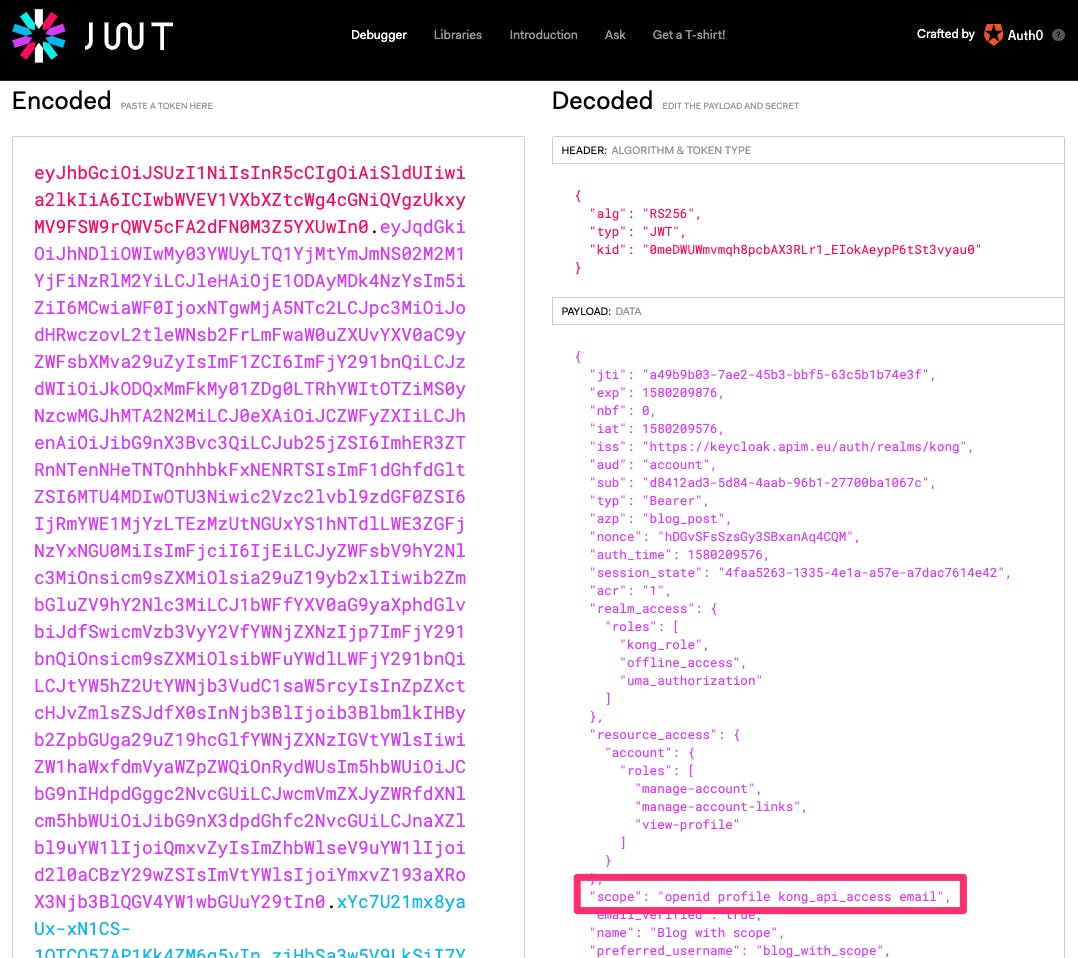
`config.scopes_required` defines which scopes are authorized to access. We are defining the JWT returned by KeyCloak must include the scope `kong_api_access`. Only then Kong will authorize the request and route it to the upstream (backend). The KeyCloak screenshots above show the scope attached to the group of which the user is a member.
## Let’s try it
For testing purposes, I have two example users in KeyCloak:
- Blog_with_scope / veryComplexPa55word
- Blog_without_scope / veryComplexPa55word
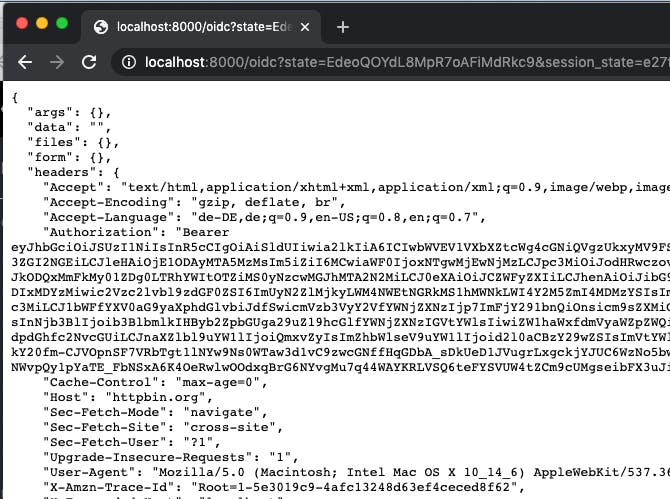
Open a new browser window (either in incognito mode or with all caches empty) and navigate to `http://localhost:8000/oidc`. You will notice that the user `Blog_with_scope` will get access.
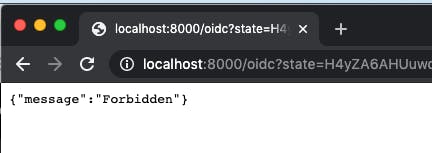
But `Blog_without_scope` is denied even though he is also a valid user in KeyCloak.
The user without the scope will produce a log entry like `required scopes were not found [ openid, profile, email ]` in your Kong logs.
Last but not least, let’s have a look at the JWT for `Blog_with_scope`, which includes the scope:
## Outlook
In this post, we've covered how to secure APIs and services with Kong and an IdP without having to manage local consumers or groups in Kong, allowing the IDd to be the source of truth for identity and entitlements. In a future blog post, we'll cover how to apply policy (i.e., rate limiting and caching) to authenticated consumers.
When it comes to digital identity, OpenID and OAuth are two peas in a pod, but they have their differences. OpenID connects you to relying parties using a single sign-on, while OAuth grants access tokens so you can give apps limited access. They bo
Axandria Shepard
# Getting Started With Kong’s OpenID Connect Plugin
The concept of zero-trust security is relatively simple. In essence, no entity or system should have trust by default. You should assume that any system you are talking to is not trustworthy until you establish otherwise. Within Kong Konnect , one
Ahmed Koshok
# Merge API Management & Identity to Unlock Your API Platform's Potential
The challenge: A disconnected world Consider the typical enterprise architecture in a relatively mature organization, an API management layer defines and deploys services to an API gateway, an Identity Provider (IDP) manages human user identities, a
Bots make up more than a third of internet traffic, and API endpoints attract more of it than web pages do. Scanners hunting for .env files, credential-stuffing scripts, LLM training crawlers, and the long tail of low-effort probes all hit your gate
Josh Wigginton
# Introducing Token Vault: Agents Access Everything. Hold Nothing.
Traditional applications generally have well-defined boundaries. They interact with a known set of services using credentials provisioned specifically for those connections. Agents are different. Their value comes from their ability to work across s
Alex Drag
# Automating Agreement Workflows with Kong Konnect and Docusign for Developers
Traditional agreement processes were slow and heavily manual. Documents were often created in office tools, shared through email, printed, signed physically, and stored across multiple systems. Tracking the status of agreements required manual follo
Paige Rossi
# No More Static Secrets: Kong Expands Cloud-Native Authentication Support
How Kong Gateway 3.14 closes the consistency gap in IAM-based authentication across AWS, Azure and GCP — and what it means for your production deployments
Starting with 3.13 (which addressed Redis support) and completed in 3.14, Kong now presents
Walker Zhao
# OpenID vs OAuth: Understanding API Security Protocols
When it comes to digital identity, OpenID and OAuth are two peas in a pod, but they have their differences. OpenID connects you to relying parties using a single sign-on, while OAuth grants access tokens so you can give apps limited access. They bo
Axandria Shepard
# Getting Started With Kong’s OpenID Connect Plugin
The concept of zero-trust security is relatively simple. In essence, no entity or system should have trust by default. You should assume that any system you are talking to is not trustworthy until you establish otherwise. Within Kong Konnect , one
Ahmed Koshok
# Merge API Management & Identity to Unlock Your API Platform's Potential
The challenge: A disconnected world Consider the typical enterprise architecture in a relatively mature organization, an API management layer defines and deploys services to an API gateway, an Identity Provider (IDP) manages human user identities, a
Bots make up more than a third of internet traffic, and API endpoints attract more of it than web pages do. Scanners hunting for .env files, credential-stuffing scripts, LLM training crawlers, and the long tail of low-effort probes all hit your gate
Josh Wigginton
# Introducing Token Vault: Agents Access Everything. Hold Nothing.
Traditional applications generally have well-defined boundaries. They interact with a known set of services using credentials provisioned specifically for those connections. Agents are different. Their value comes from their ability to work across s
Alex Drag
# Automating Agreement Workflows with Kong Konnect and Docusign for Developers
Traditional agreement processes were slow and heavily manual. Documents were often created in office tools, shared through email, printed, signed physically, and stored across multiple systems. Tracking the status of agreements required manual follo
Paige Rossi
# No More Static Secrets: Kong Expands Cloud-Native Authentication Support
How Kong Gateway 3.14 closes the consistency gap in IAM-based authentication across AWS, Azure and GCP — and what it means for your production deployments
Starting with 3.13 (which addressed Redis support) and completed in 3.14, Kong now presents
Walker Zhao
# OpenID vs OAuth: Understanding API Security Protocols
When it comes to digital identity, OpenID and OAuth are two peas in a pod, but they have their differences. OpenID connects you to relying parties using a single sign-on, while OAuth grants access tokens so you can give apps limited access. They bo
Axandria Shepard
# Getting Started With Kong’s OpenID Connect Plugin
The concept of zero-trust security is relatively simple. In essence, no entity or system should have trust by default. You should assume that any system you are talking to is not trustworthy until you establish otherwise. Within Kong Konnect , one
Ahmed Koshok
# Merge API Management & Identity to Unlock Your API Platform's Potential
The challenge: A disconnected world Consider the typical enterprise architecture in a relatively mature organization, an API management layer defines and deploys services to an API gateway, an Identity Provider (IDP) manages human user identities, a
Bots make up more than a third of internet traffic, and API endpoints attract more of it than web pages do. Scanners hunting for .env files, credential-stuffing scripts, LLM training crawlers, and the long tail of low-effort probes all hit your gate
Josh Wigginton
# Introducing Token Vault: Agents Access Everything. Hold Nothing.
Traditional applications generally have well-defined boundaries. They interact with a known set of services using credentials provisioned specifically for those connections. Agents are different. Their value comes from their ability to work across s
Alex Drag
# Automating Agreement Workflows with Kong Konnect and Docusign for Developers
Traditional agreement processes were slow and heavily manual. Documents were often created in office tools, shared through email, printed, signed physically, and stored across multiple systems. Tracking the status of agreements required manual follo
Paige Rossi
# No More Static Secrets: Kong Expands Cloud-Native Authentication Support
How Kong Gateway 3.14 closes the consistency gap in IAM-based authentication across AWS, Azure and GCP — and what it means for your production deployments
Starting with 3.13 (which addressed Redis support) and completed in 3.14, Kong now presents
Walker Zhao
## Ready to see Kong in action?
Get a personalized walkthrough of Kong's platform tailored to your architecture, use cases, and scale requirements.